Fried Fish in a Bengali Style
White fish in a bright green coriander, garlic and chilli paste, crumbed twice and shallow fried until golden. Best with kasundi.
- Serves
- 2
- Prep
- 40 min
- Rest
- 2 hr 30 min
- Cook
- 20 min
- Total
- 3 hr 30 min
A well done piece of fried fish is a pure joy. This particular style of fried fish is from Bengal, and I imagine it came to be when a Raj-era English bureaucrat asked his Indian cook to fry some fish. The fish is coated in a highly flavourful paste before being crumbed and fried.

Ingredients
For the fish
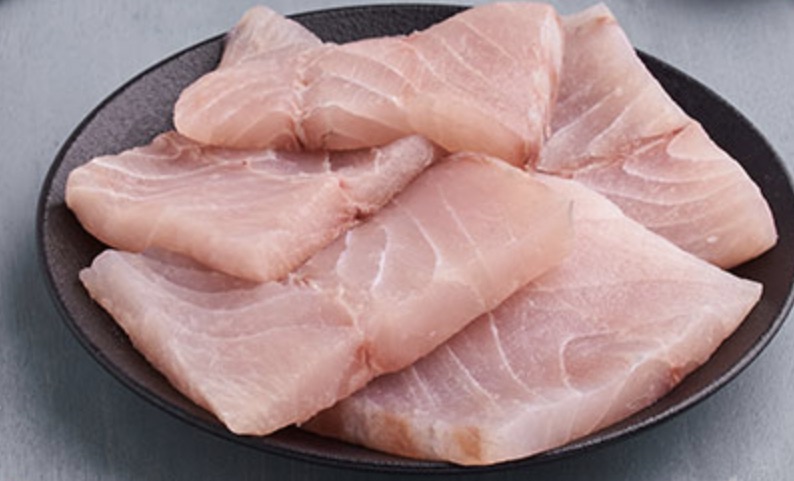
- 350–400 g white fish fillets. Bhetki (sea bass / barramundi) is a popular option, but any firm white fish would work. See the image below for a cut reference. The fillets are about ½" thick.
For the marinade
- 6 garlic cloves
- ½" knob of ginger
- 3 green chillies (seeds and all)
- 100 g coriander (leaves and stems)
- 1 tbsp lemon juice
- 3–4 teaspoons of water
- Salt to taste
For the breading
- 2 cups of breadcrumbs
- 4 eggs
- ¼ cup of plain flour
- Salt to taste
Method
Marinate and crumb
- Prepare the marinade: grind all the marinade ingredients (except the water) in a liquidiser or a spice grinding jar.
- The marinade should be a thick paste, so only use some of the water to help the ingredients grind.
- Once done, it should be a bright, vibrant green.
- Coat all the fillets with the marinade. You want a generous layer across the fillets, not thick, but with complete coverage.
- Rest the fillets, covered, in the fridge for 2–3 hours. I suggest using a glass or similar non-reactive container.
- To prepare the breading, season the breadcrumbs and the plain flour with a little salt.
- Beat the eggs so they are a thick liquid, but not frothy.
- Remove the fish from the fridge.
- Dip it in the flour and lightly dust all sides. The fish should be damp enough from the marinade for the flour to stick to it.
- Dip the fish in the egg and then in the crumbs.
- Dip the fish in the egg again and crumb it a second time. This gives you a thick enough layer to protect the fish and get nice and crispy.
- Let the crumbed fish rest in the fridge for at least 30 minutes before you start frying. It can rest for up to 4 hours. If resting any longer than 30 minutes, pull it out 10 minutes before you start cooking.
Frying
- Use a skillet large enough to cook 2 fillets at a time with about an inch and a half of space around each fillet.
- The fish will be shallow fried, so use enough oil to come halfway up the thickness of the fillets.
- Heat the oil on medium heat until a cube of bread dropped in starts gently bubbling.
- Put in the fish fillets and cook until one side is golden, then flip them over and cook the other side to the same colour.
- Pull them out and let them rest on absorbent paper.
- Cook the other fillets in the same way.
- Serve hot.
To serve
Traditionally this is served with kasundi: strong and pungent, it looks like a bright yellow, liquid seeded mustard. If you cannot get your hands on kasundi, mix Dijon and seeded mustard to get the consistency. Or try it with hot English mustard.
Alternatively, if you have some mustard powder, just mix a teaspoon with a couple of teaspoons of water.
Tips
- If you want a lighter breading, don’t double dip, but stick a few more crumbs on in the first round.
- If your fish fillets smell slightly fishy, let them rest in a bowl of water with a teaspoon of plain vinegar for 10 minutes before marinating.
- Don’t let the oil get too hot, or the crumbs will burn before the fish is cooked.

Eat in good health!